The ask
Content Market King is a marketing agency for small businesses: websites, SEO, content and AI services, sold as a way to win more customers for less. Their own site had to be the proof of that pitch, so it needed to be fast, polished and easy to keep current. They came to Waheed Tech with the design already settled, built from a purchased HTML template (ThemeForest's 'Quad'), and a first version of the site already standing on WordPress.
The design was not in question. The platform under it was. The WordPress build could show the template, but it could not bend to it without a fight, and it carried a performance and maintenance cost the business would keep paying every month it stayed.
The brief was narrow and unusually clear: keep the approved design to the pixel, but move it onto a foundation that is fast, fully under our control, and something the team can edit themselves.
Starting point: a template on WordPress
The first build took the obvious path. The Quad HTML template was ported into a WordPress theme and the page assembled from Gutenberg blocks, with the usual supporting cast: a page-builder plugin for the block layouts, slider libraries, a Mailchimp form, jQuery, and dynamic CSS generated from the theme's customiser settings.
It worked, in that the page loaded and matched the design. But 'lacked flexibility' turned out to mean something specific:
- Every change meant working through the page builder's block markup and the theme's render callbacks rather than editing the design directly. Small adjustments were slow and fragile.
- The design shipped buried under plugin output, slider CSS and JS, page-builder scaffolding, jQuery, sent to every visitor whether the page used it or not. The above-the-fold imagery alone was around 8 MB.
- Styling was split between static CSS and CSS the theme generated from customiser 'theme mods', so the real source of any given style lived in two places and was awkward to override cleanly.
- Anything genuinely custom, a hand-built mobile menu, a redesigned blog, a bespoke admin, meant fighting the template and its plugins rather than building on a clean base.
- And a WordPress install, core, theme and a dozen plugins, is a standing update and security surface, for what is in the end a mostly static marketing site with a blog.
Why we pivoted to a custom build
The design was worth keeping; the platform was not. Rather than keep bending WordPress toward the design, Waheed Tech rebuilt the site on the architecture proven across our other projects: a Next.js front end with a Laravel back end serving it over the local network only.
The template's own CSS was carried over verbatim and the original class names preserved, so the rebuilt site matches the approved design exactly, the difference is entirely underneath. What changed is ownership: the design, the performance budget and the editing experience are ours to shape now, not the plugin stack's.
The shape of it
The browser only ever talks to Next.js. Laravel runs as a pure JSON API bound to localhost, reached only by the Next.js server, so the API is never exposed publicly and the admin's session token never reaches browser JavaScript. Uploaded images are served straight from disk by the web server. It is the same pattern behind our other production sites, and it keeps the public surface small and fast.
One more pivot: dropping the admin framework too
The first custom build used Filament, a ready-made Laravel admin, for the client's editing screens. It worked, but it repeated the original mistake in miniature: it shipped around 1.4 MB of its own CSS and JavaScript to the browser and round-tripped to the server on almost every click, and it was a second, separate UI stack bolted onto an otherwise React project.
So the admin was rebuilt a second time, as Next.js pages in the same React stack as the rest of the site, talking to the same Laravel API. The admin bundle dropped from about 1.4 MB to roughly 580 KB, the vendor and public-asset weight fell sharply, and the whole project became one coherent codebase instead of two.
Migrating the content off WordPress
A live site with a real blog cannot simply be swapped out; its content has to come with it. Waheed Tech wrote a single-command importer that reads the WordPress export and rebuilds every post in the new system, idempotently, so it can be re-run safely.
- All 15 published posts were imported, keyed on their existing URLs so nothing already indexed or linked would break.
- Gutenberg's block comments were stripped, YouTube embeds converted to responsive iframes, and leftover Mailchimp scripts and shortcodes dropped rather than carried across as dead markup.
- Every image, 44 of them, and an 18 MB video were copied over, and every link pointing at the old WordPress domain was rewritten to a working path, so the content keeps working the moment WordPress stops serving it.
- Existing SEO descriptions and author credit were preserved, so the migration is invisible from the outside.
Giving the client control, properly
The one thing WordPress genuinely does well is let a non-developer edit the site, and a custom build only earns its keep if it keeps that. So the parts of the site the team actually changes were made editable from a purpose-built admin, with none of the WordPress weight:
- Homepage headings and text, FAQs and the brand-logo strip are all editable, with drag-to-reorder and show/hide, so the marketing copy is not locked away in code.
- The blog runs on a clean rich-text editor with draft and publish states and featured images.
- Team accounts are managed in-app, each member an equal editor.
- A coming-soon and maintenance switch can gate the public site while a signed-in admin still previews the real thing, returning the correct 'temporarily down' response to search engines when maintenance is on.
- A first-party, cookie-free analytics view on the dashboard tracks page views and unique visitors with no third-party script and no cookie banner, drawn as a server-rendered chart that ships no charting library to the browser.
The site, as shipped
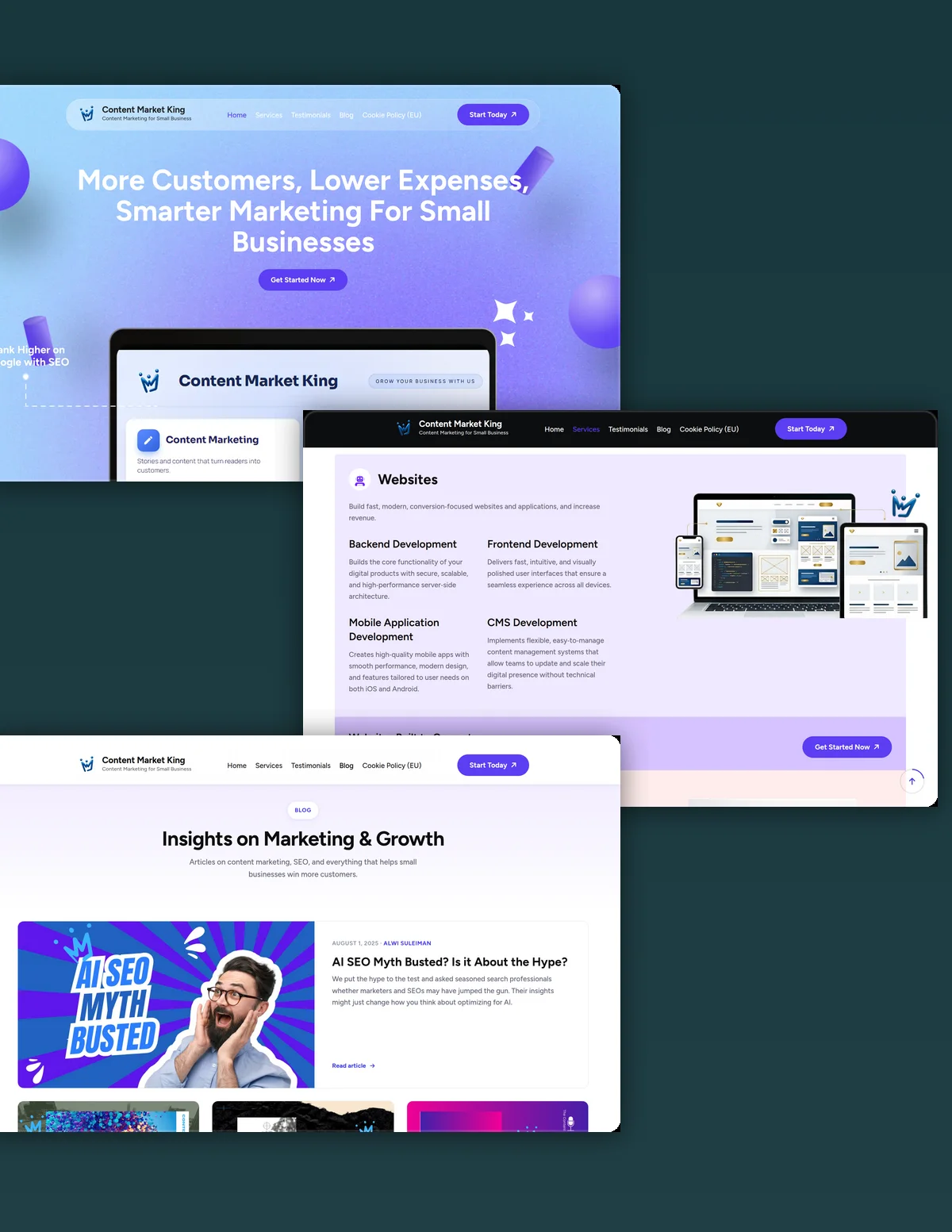
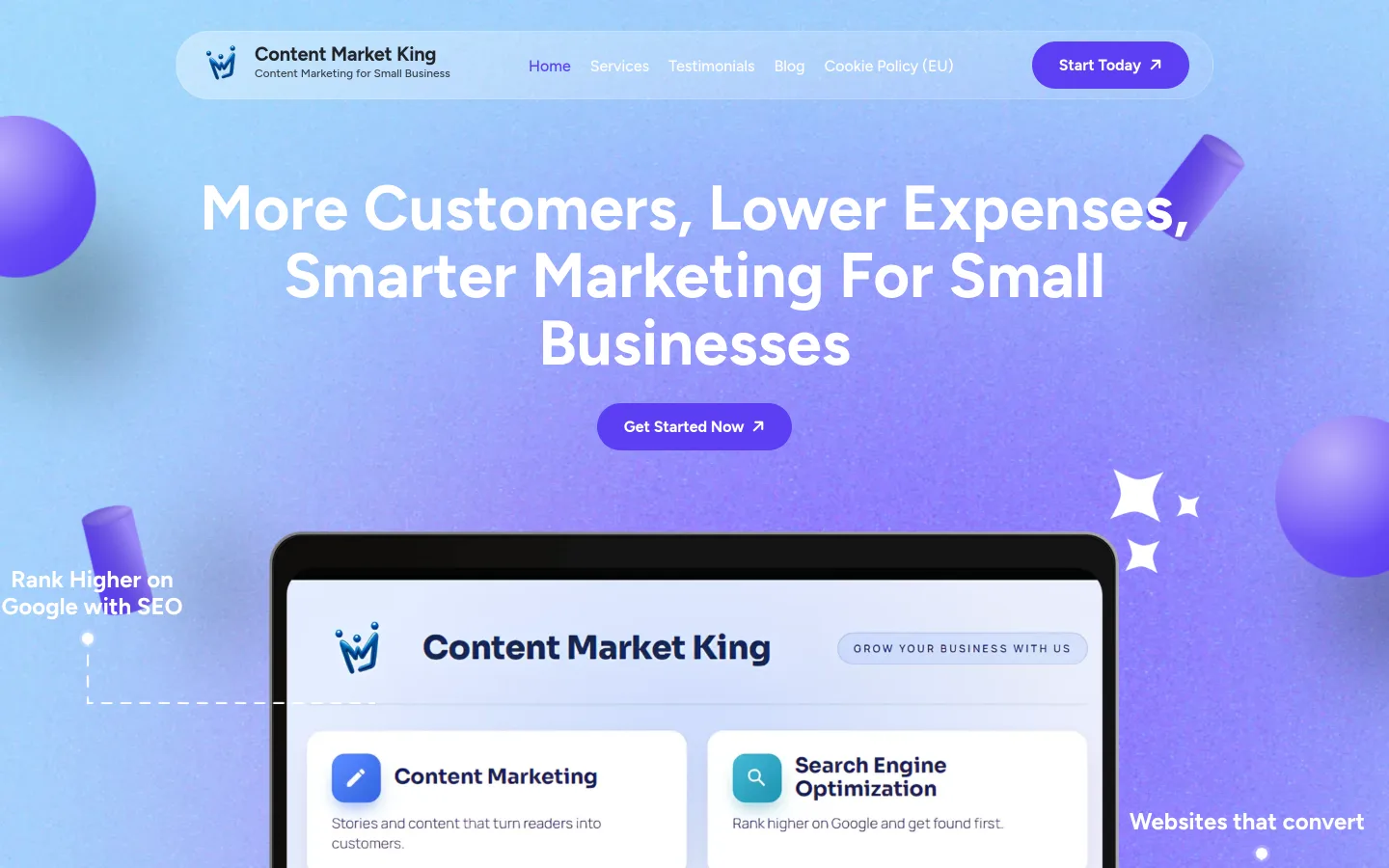
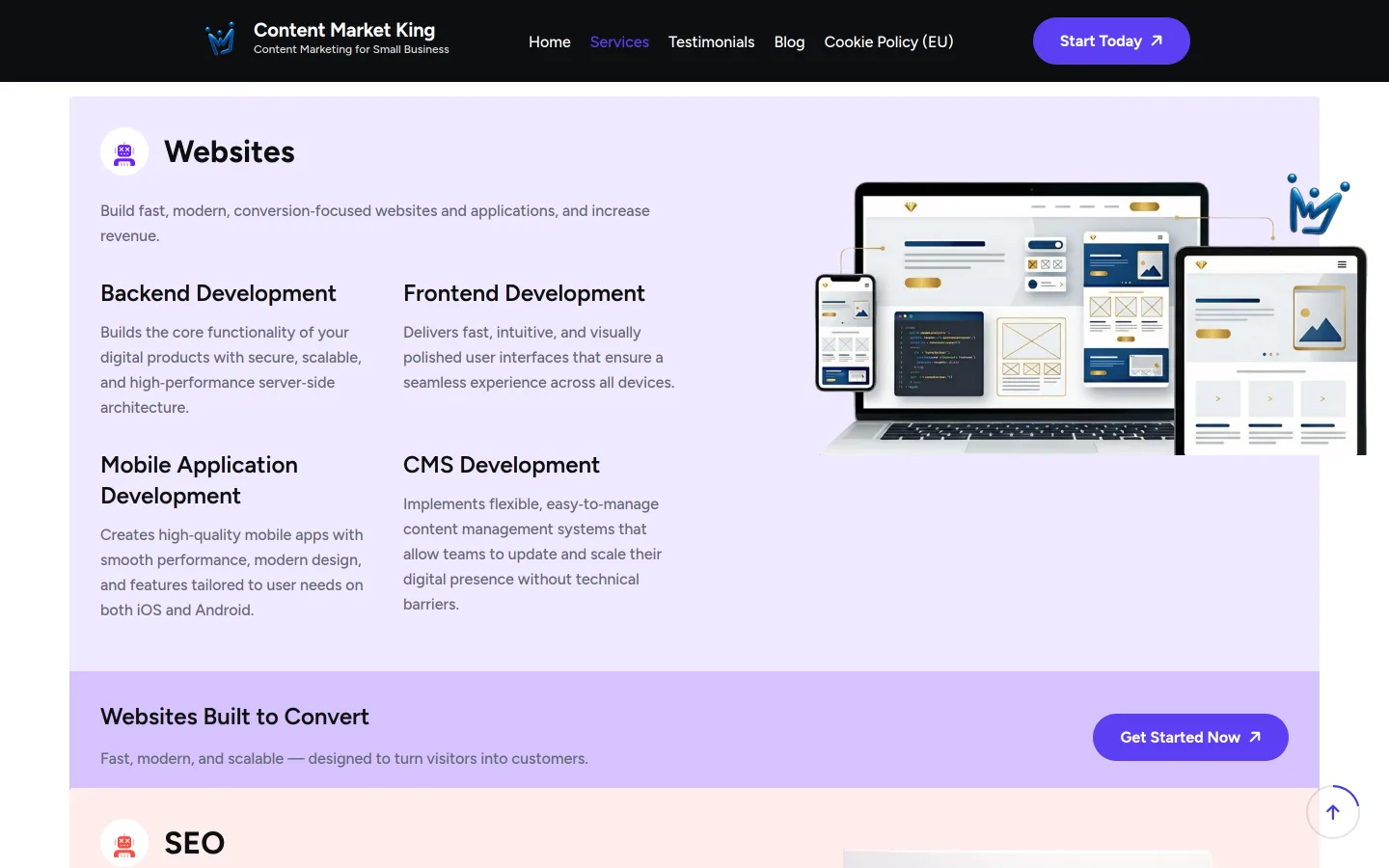
These are the real screens from the live site: the homepage the design was built around, the services section, and the blog carried over from WordPress. Open any one to see it full size.

Results and impact
Measured against the original ask, not a generic launch checklist:
- The live site matches the approved design to the pixel, the template's CSS and class names were preserved, while everything underneath is now custom and under our control.
- The WordPress runtime is gone: no WordPress, no PHP plugins, no jQuery, and the old slider libraries were dropped. The one deliberate keep is the design's own static CSS and class names, preserved verbatim so the page still matches the approved design exactly. Above-the-fold imagery was rebuilt as WebP and fell from roughly 8 MB to about 700 KB.
- The admin the client edits from dropped from about 1.4 MB to ~580 KB once the Filament stack was replaced, and the public API now answers in single-digit milliseconds.
- The entire blog, 15 posts, 44 images and a video, moved off WordPress with its URLs, embeds and internal links intact, so no existing traffic or link was lost in the switch.
- The team edits headings, FAQs, logos, posts and users themselves, keeping the one advantage WordPress had while shedding its cost.
- The site went live on its own domain over HTTPS, with SEO metadata, a sitemap, structured data and first-party analytics in place from day one.

Content Market King kept the design it had already approved and lost everything that was holding it back: the plugins, the page builder, the eight megabytes of images and the standing maintenance surface of a WordPress install. What is live now looks like the same site, rebuilt as something fast, self-managed, and entirely theirs.